n8n vs. Dify: A Deep Dive and Comparative Analysis
n8n vs. Dify: A Veteran Engineer’s Comparison Report
As a veteran in the automation space with over a decade of experience, I’ve spent the past few months diving deep into two platforms that have been generating significant buzz: n8n and Dify. To be honest, I approached them with a healthy dose of skepticism—initially viewing them as yet more “overhyped” tools. However, after months of rigorous project validation, I must admit: they each have distinct advantages and excel in specific scenarios.
Today, I’ll share my honest perspective on the pros and cons of these platforms based on real-world usage.
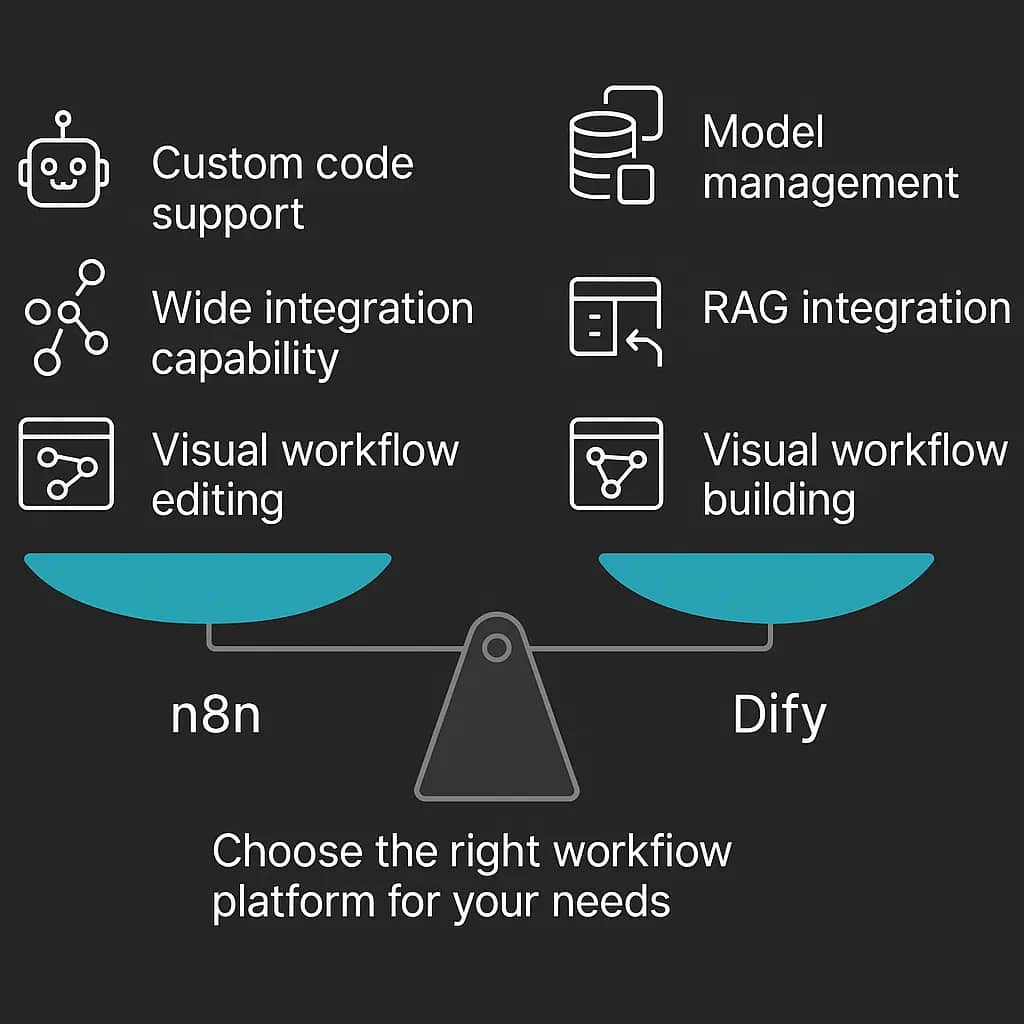
First Impressions: Contrast in Design Philosophy
Opening n8n for the first time felt like returning to a familiar development environment. The interface is permeated with Engineering Mindset: nodes, connections, and triggers, all with crystal-clear logic. Dify, on the other hand, feels entirely different. It’s clearly designed for Product Managers and Business Users—clean, intuitive, and focused on immediate results.
Architecturally, n8n follows the traditional workflow automation paradigm, focusing on system integration and data flow. Its 400+ built-in nodes cover nearly every major SaaS service and API. Dify is AI-Native from the ground up, built specifically around Large Language Models (LLMs).
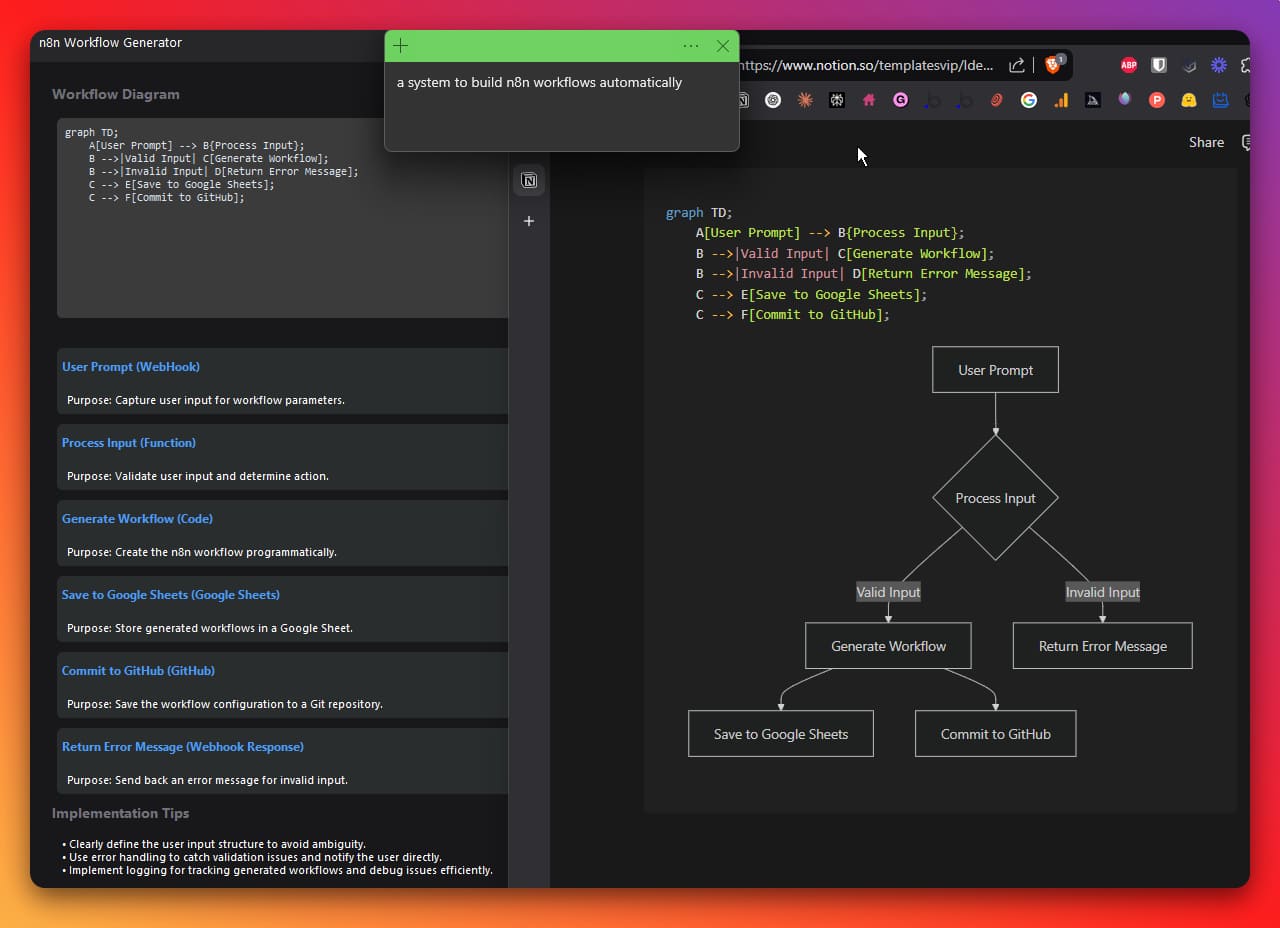
n8n: New Life for a Classic Automation Tool
Core Capability Validation
After three months of heavy usage, I deployed n8n internally to test several key scenarios:
Data Integration Pipelines: A typical requirement was syncing Salesforce customer data to an internal CRM while simultaneously updating an inventory system. The process in n8n was seamless:
- Salesforce Trigger for real-time data changes.
- HTTP Request Node to call internal APIs.
- Data Transformation Node to handle format discrepancies.
- Conditional Logic Nodes for error handling.
- Slack Notification Node for status updates.
The entire workflow was set up in less than 2 hours—a task that would have taken a week with traditional ETL tools.
AI Capability Fusion: What impressed me most was the introduction of the AI Agent Node in the latest versions. I built an Automated Support Router: the system analyzes incoming emails via OpenAI to determine the issue type and then routes them to the appropriate automated flow. This synergy of AI + Automation unlocks entirely new possibilities.
Architectural Advantages
n8n is built on a solid foundation of Node.js and supports Custom Code Nodes. In practice, I found several distinct advantages:
- Extreme Extensibility: When built-in nodes aren’t enough, you can write JavaScript or Python directly. This is a game-changer for developers.
- Robust Performance: It handles large datasets with stability; we tested it with 100k records in a single run without issues.
- Flexible Deployment: Supports Docker, Kubernetes, and typical enterprise-grade features.
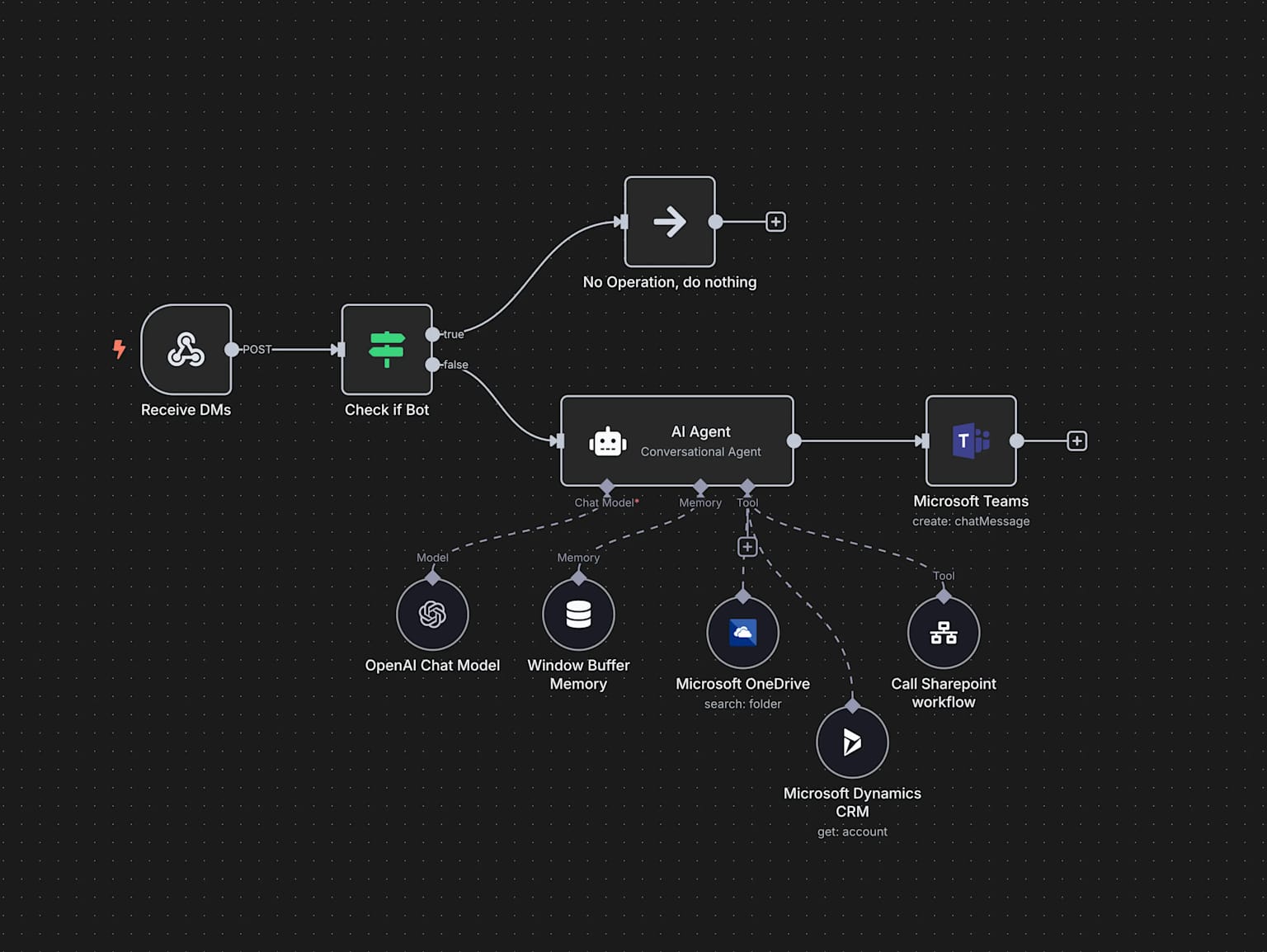
Real-world Pain Points
n8n isn’t without its flaws. During use, I encountered several challenges:
- High Learning Curve: Non-technical users often struggle to understand data flow relationships between nodes.
- UI Complexity: Once a workflow exceeds 50 nodes, the canvas becomes cluttered and difficult to navigate.
- Debugging Difficulty: Troubleshooting complex flows can be time-consuming when errors occur deep in the logic.
Dify: A New Paradigm for AI-Native Applications
Out-of-the-box AI Capabilities
Dify’s greatest strength is its Native Support for AI. Without complex configuration, you can set up a Smart Customer Service Bot in minutes. I used it for several typical AI applications:
Enterprise Knowledge Base (Chat with Docs): Upload technical docs and FAQs, and Dify handles the vectorization and indexing automatically. The system then accurately retrieves relevant content to answer user queries. This is Zero-Code, a massive win for product teams.
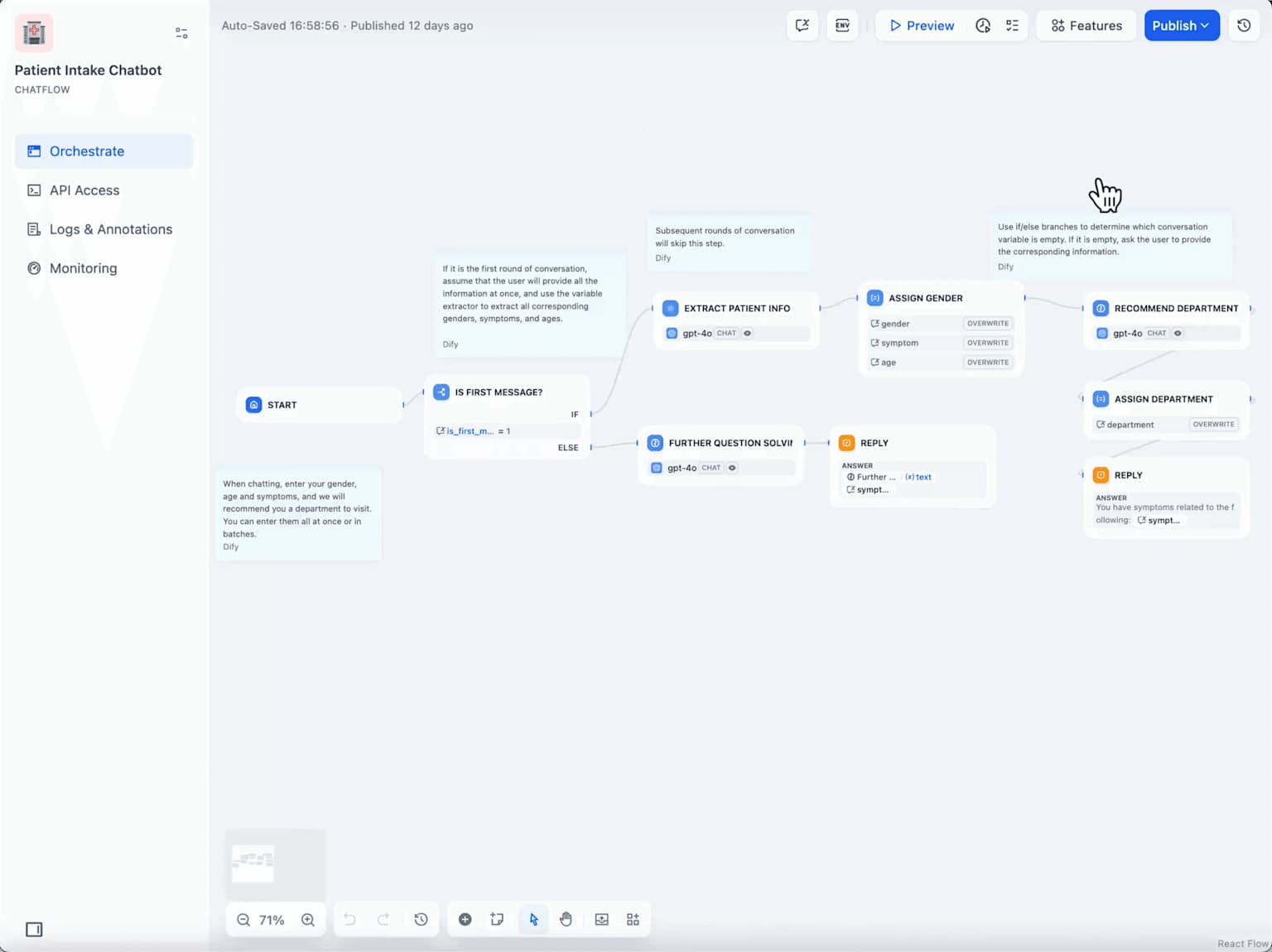
Multi-Model Management: Dify allows you to switch between OpenAI, Claude, and various local or domestic models. This flexibility lets you optimize for cost and performance on a per-project basis.
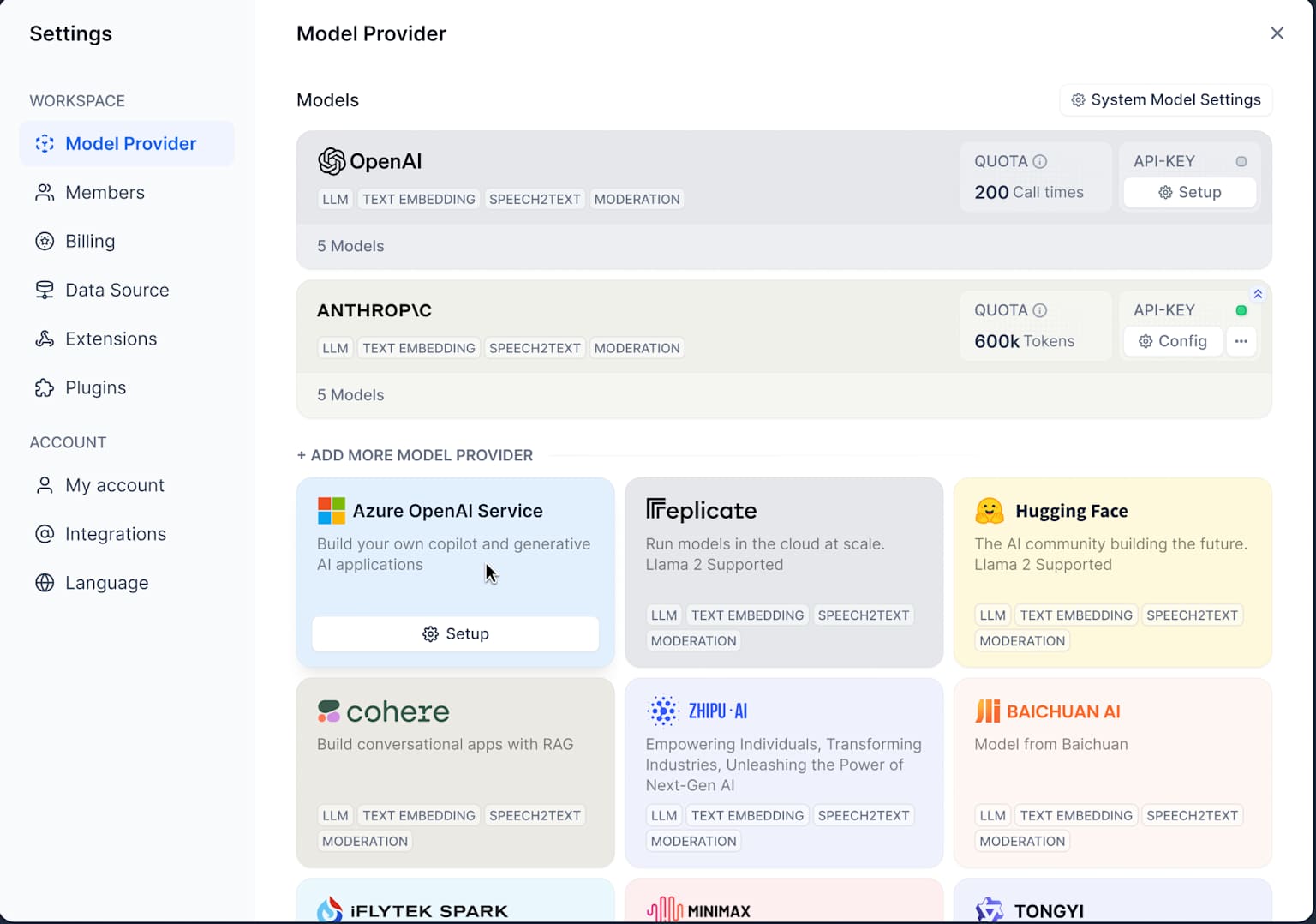
RAG Implementation
Dify’s RAG (Retrieval-Augmented Generation) feature is remarkable. Traditionally, building a RAG system involves managing document parsing, embedding, and vector retrieval manually. In Dify, it’s just a few clicks:
- Upload documents (PDF, Word, TXT).
- Choose a segmentation strategy.
- Configure retrieval parameters.
- Orchestrate into the conversation flow.
This level of simplification effectively lowers the barrier to entry for AI developers, enabling Non-AI Specialists to build sophisticated apps.

Workflow Orchestration
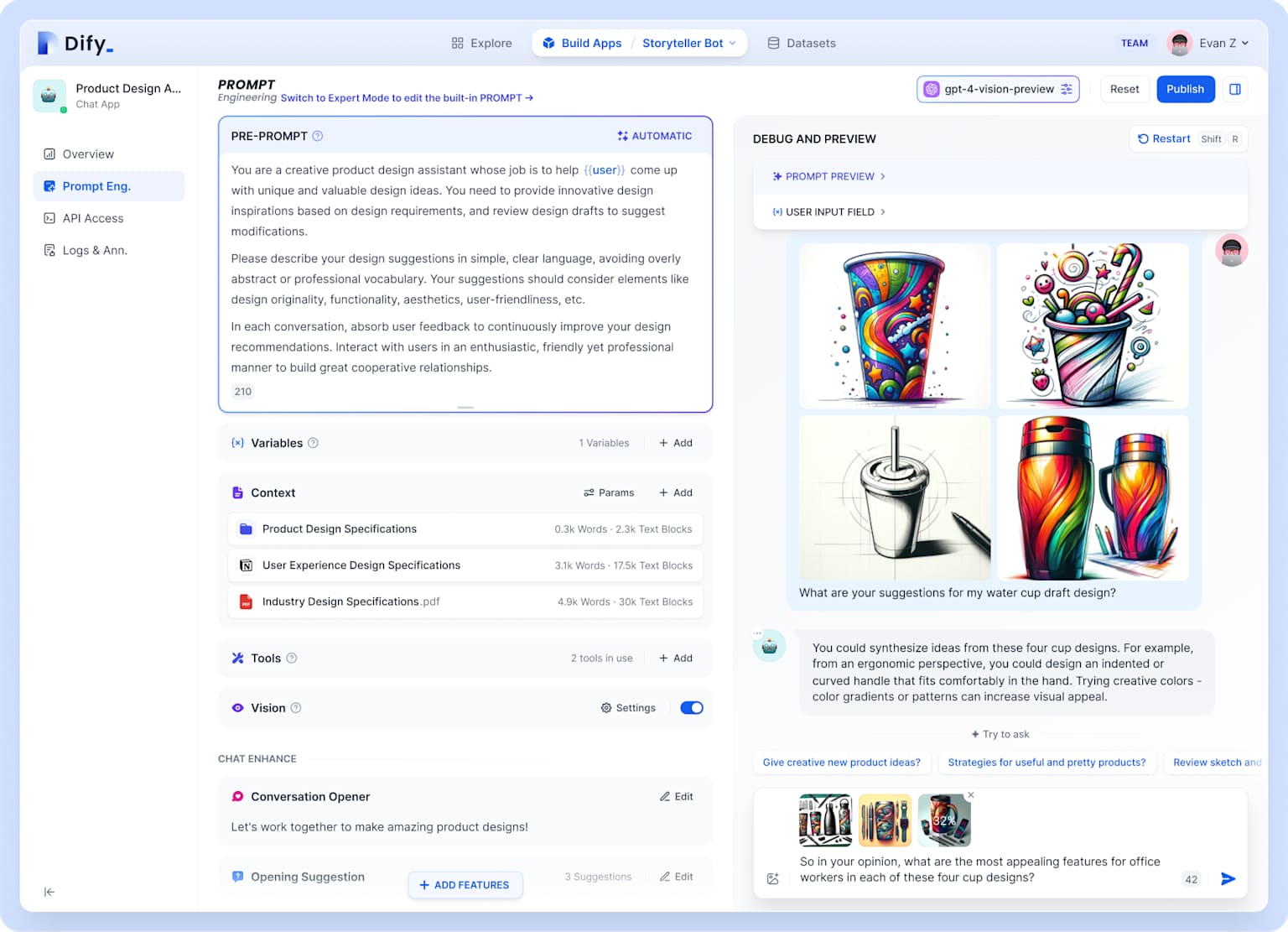
While Dify’s workflow nodes aren’t as exhaustive as n8n’s, they are highly optimized for AI Scenarios. Key highlights include:
- Prompt Engineering: Built-in editor and version management are incredibly practical.
- Conversation Design: The Chatflow mode is perfect for building complex dialogue logic.
- Model Switching: Use different models for different steps within a single workflow.
Head-to-Head: Scenario-Driven Choice
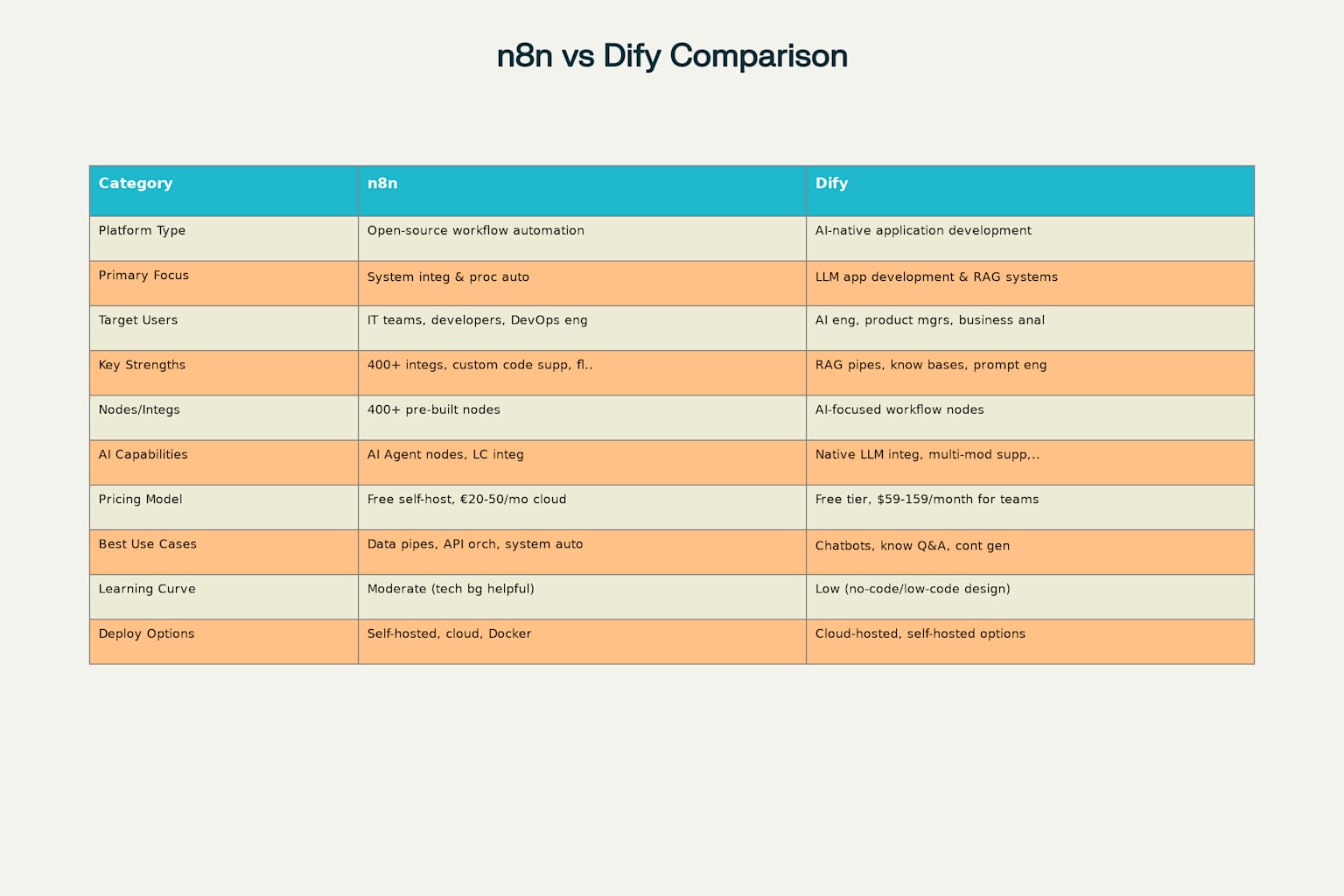
After months of parallel use, here is how I summarize the core differences:
Technical Complexity
In terms of Technical Barriers, n8n is better suited for teams with a Technical Background. Even though it’s a visual editor, you still need to understand HTTP protocols, JSON formats, and API concepts to truly master it.
Dify provides a true Low-Code/No-Code experience. Business users can build AI applications through drag-and-drop and configuration alone. This fundamental difference defines their respective audiences.
Integration Capability
n8n is the undisputed king of System Integration, with 400+ nodes covering nearly all mainstream SaaS. Its support for custom code makes it infinitely extensible.
Dify is more focused, concentrating its integration power on AI Models and Vector Databases. In the specific niche of AI application building, its depth is currently unmatched by n8n.
Performance and Stability
Both platforms proved reliable in my tests. n8n excels in high-volume data processing (tested for 72 continuous hours on massive datasets), while Dify optimizes for the responsiveness of AI inference, supporting streaming output for a smooth user experience.
Cost Analysis: Beyond the Price Tag
Explicit Costs
At a glance, n8n Cloud starts at €20/month, while Dify Team starts at $59/month. Dify appears more expensive, but this is an apples-to-oranges comparison given their different feature sets.
Implicit Costs
The real factor is Implicit Cost. Using n8n requires ongoing investment from a Technical Team for design, maintenance, and troubleshooting. Dify’s Low-Code nature allows Product Teams to take the lead, reducing Reliance on developer resources.
In terms of ROI, if your goal is to quickly validate the business value of an AI application, Dify is the clear winner. If you are building a complex, enterprise-grade automation ecosystem, n8n may offer lower long-term costs.
The Combo: 1 + 1 > 2
In real projects, I’ve found that n8n and Dify can actually work beautifully together.
Consider a Smart Customer Service System:
- User queries first hit Dify for intent recognition and initial AI response.
- For complex issues requiring action, Dify passes structured data to n8n via API.
- n8n handles ticket creation, routing, and notifications.
- Feedback loop: Data flows back to Dify to fine-tune AI responses.
This combination leverages the unique strengths of both, achieving true End-to-End Intelligence.

Practical Advice: How to Get Started
Based on my experience, here are my recommendations:
When to choose n8n:
- Your team has a technical foundation.
- You need complex system integrations.
- You require high flexibility in data flow.
- You have massive API call and data processing needs.
When to choose Dify:
- You want to launch AI applications FAST.
- Your team has limited technical resources.
- Your primary needs are chatbots, knowledge bases, or content generation.
- You need to quickly validate AI business value.
Conclusion: The Philosophy of Choosing Tools
After months of “messing around” with both, my biggest takeaway is: There is no perfect tool, only the right choice for the job.
n8n and Dify represent two different paths: traditional workflow automation and AI-native application development. Both have reached excellence in their respective domains.
If your team is considering automation or AI, my advice is: Define the goal before choosing the tool. Are you solving a system integration problem or building an AI app? Do you prioritize absolute flexibility or speed of delivery?
Once you know the answer, the choice becomes simple.
One final note: both platforms are iterating at breakneck speed. I believe they will continue to lead their respective fields, and I hope to see even more synergy between them in the future. After all, users don’t need tool competition—they need better solutions.
Comparison scope, versions, and limitations
Reviewed July 13, 2026 using n8n 2.25.7 and the current Dify documentation. This article does not contain a controlled benchmark, so statements about scale, speed, or ease of use should be treated as qualitative observations. Pricing, edition boundaries, node availability, and self-hosting requirements change frequently.
Before choosing either product, prototype the same workflow and record setup time, model and infrastructure cost, execution success rate, debugging time, observability, credential handling, and upgrade effort. n8n is not automatically the better integration platform for every team, and Dify is not limited to simple chatbots.