Most City Tourism Poster Prompts Fail Because They Only Stack Landmarks
Most city tourism poster prompts do not really describe a poster.
They describe a destination mood board.
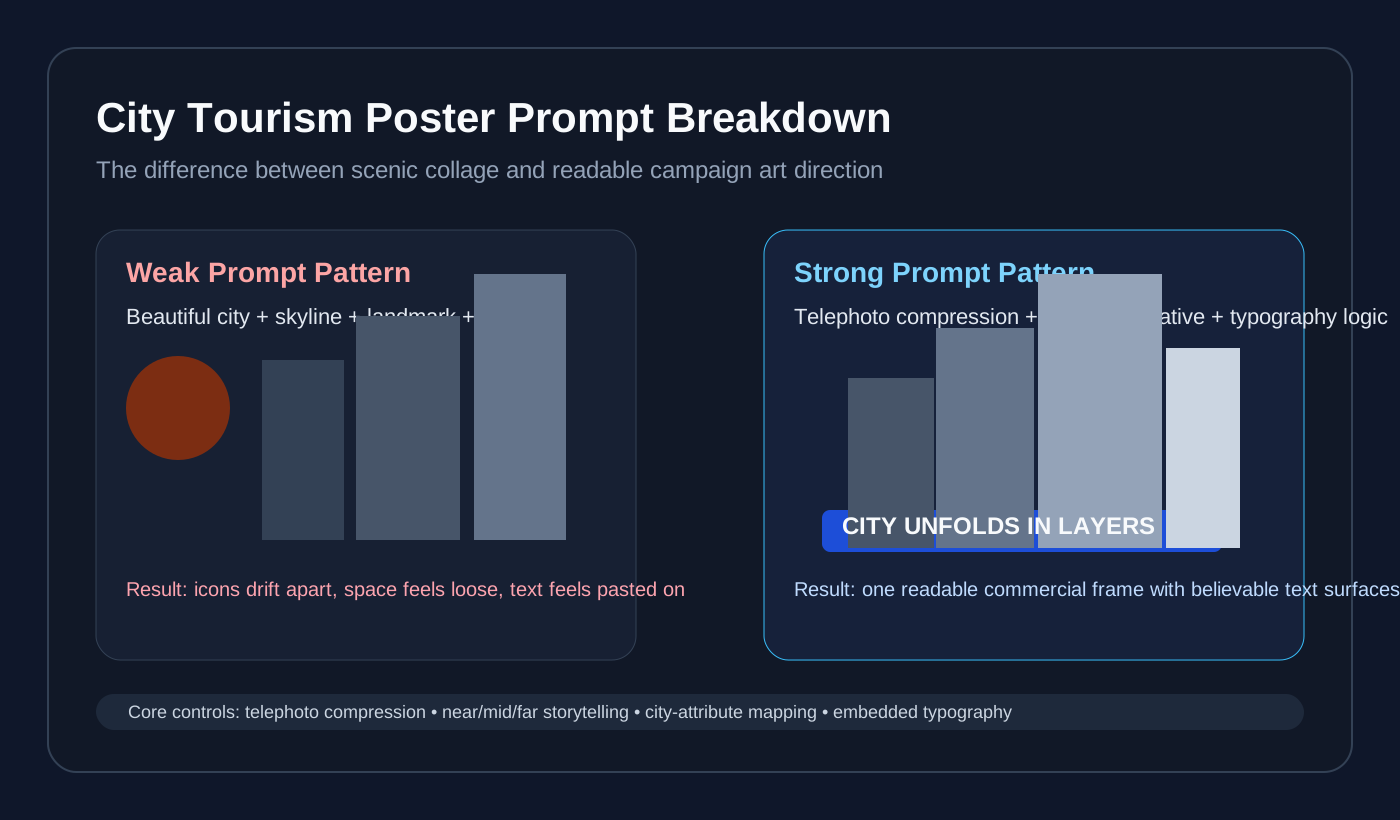
That is why so many results feel visually expensive but strategically weak. You get a skyline, a famous landmark, maybe a pretty sunset, maybe a person in the foreground, and maybe a slogan floating on top. The image can still look impressive, but it rarely feels like a piece of campaign art direction that could actually live on a subway wall, an airport lightbox, or a city rebranding brief.
If you want the result to feel like a real urban travel poster, the goal is not to collect more symbols. The goal is to compress a city’s identity into one readable commercial frame.
That changes how the prompt needs to think.
Instead of asking for “a beautiful poster of Beijing” or “a futuristic Shanghai travel ad,” it is usually more productive to build the image around four control surfaces:
- telephoto compression
- near / mid / far storytelling
- city-attribute mapping
- embedded typography rules
Once those four parts lock together, the poster stops looking like scenic wallpaper and starts behaving like designed communication.
Prompt iteration matters more than prompt length
One of the most practical mistakes creators make is assuming that a longer prompt is automatically a better prompt.
It usually is not.
The more useful distinction is whether the prompt has become more directable. A strong iteration does not just add adjectives. It improves the model’s decision boundary.
Here is the pattern I see most often:
V1asks for a beautiful city poster and gets a generic scenic resultV2adds landmarks and mood words, but still produces a collageV3defines lens logic, layer logic, city behavior, and typography placement
That third version is not better because it is longer. It is better because it resolves the ambiguities the model would otherwise improvise around.
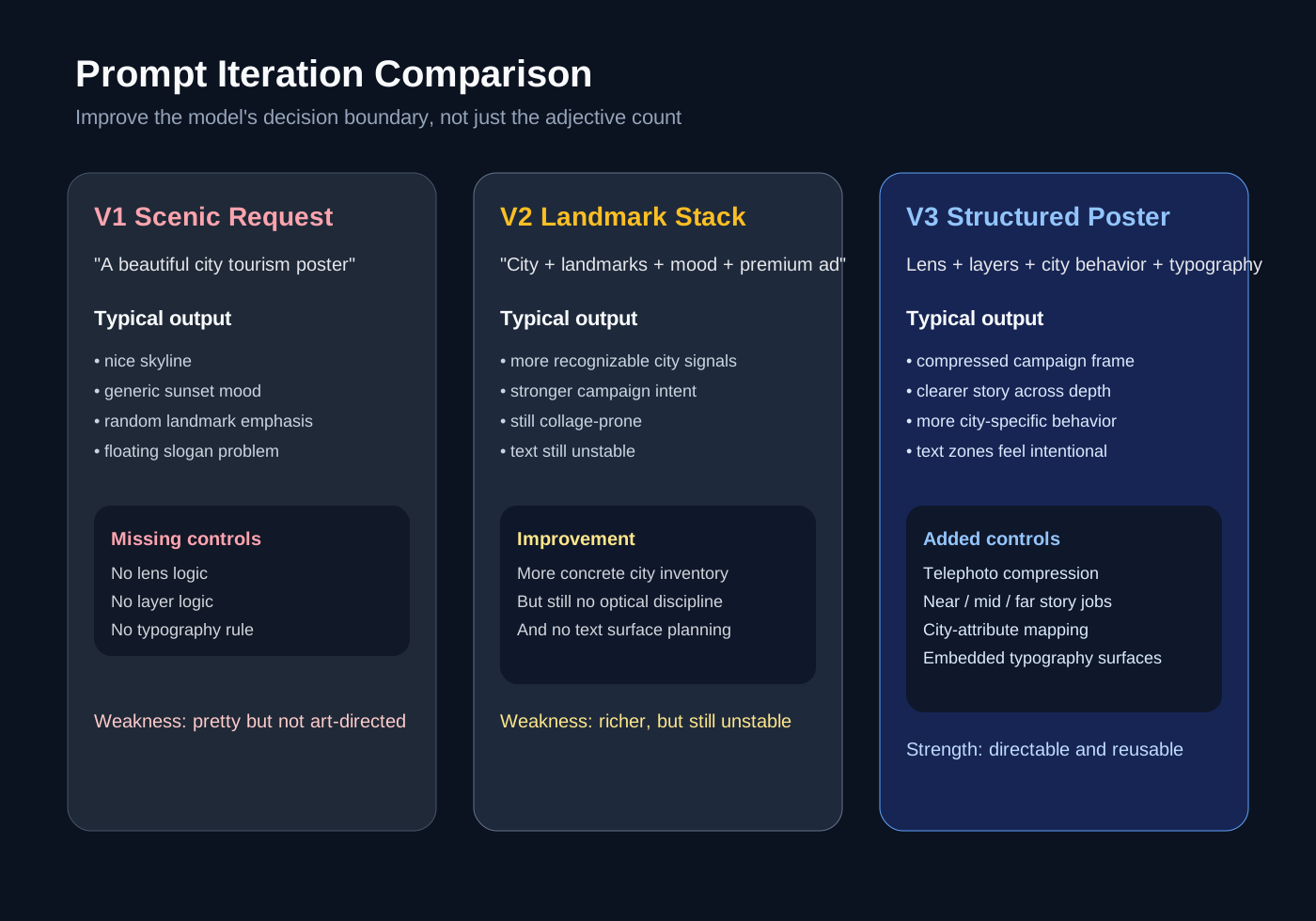
The practical lesson is simple:
- iterate by removing ambiguity, not by stacking synonyms
- fix the frame logic before polishing atmosphere
- define where text lives before asking for elegant typography
- decide how the city behaves before listing what the city contains
The poster works when the frame feels compressed, not scattered
One of the biggest differences between a generic city image and a convincing tourism poster is spatial discipline.
When prompts stay too vague, image models often solve the task by spreading the city out. The result may be cinematic, but the frame becomes loose. Landmarks drift apart, traffic feels disconnected from architecture, and text elements look pasted on after the fact.
This is why telephoto compression matters so much.
In prompt terms, telephoto compression is not just a camera preference. It is a layout instruction. It tells the model to stack planes of information more tightly so buildings, signs, people, roads, and atmospheric depth feel like they belong to the same ad image.
That tighter compression does three useful things at once:
- it lets multiple city signals coexist without the frame feeling empty
- it makes the composition feel more intentional and commercial
- it gives typography more believable surfaces to live on
For creator workflows, that means you should often specify some combination of:
- telephoto lens
- compressed perspective
- stacked urban layers
- dense but readable composition
- cinematic advertising photography
This does not mean every tourism poster needs to feel claustrophobic. It means the image should feel optically organized. A strong city poster usually reads as one compressed decision, not as five disconnected visual ideas.
Strengths and trade-offs of telephoto compression
The technique is powerful, but it is not magic. It changes the image’s strengths and weaknesses at the same time.
Advantages
- it makes landmarks, traffic, people, and signage feel part of one commercial frame
- it improves the chance that text can sit on believable surfaces
- it gives the image a campaign-photography density that wide scenic views often lack
Potential drawbacks
- it can make the image feel overcrowded if the foreground is too busy
- it can erase local geography if everything is flattened into one wall of detail
- it can push the model toward visual noise if the city-attribute mapping is weak
That is why telephoto compression works best when it is paired with selective hierarchy rather than maximum density.
Near, mid, and far layers turn scenery into narrative
A lot of prompts fail because they know what should appear in the image, but not where the story should happen.
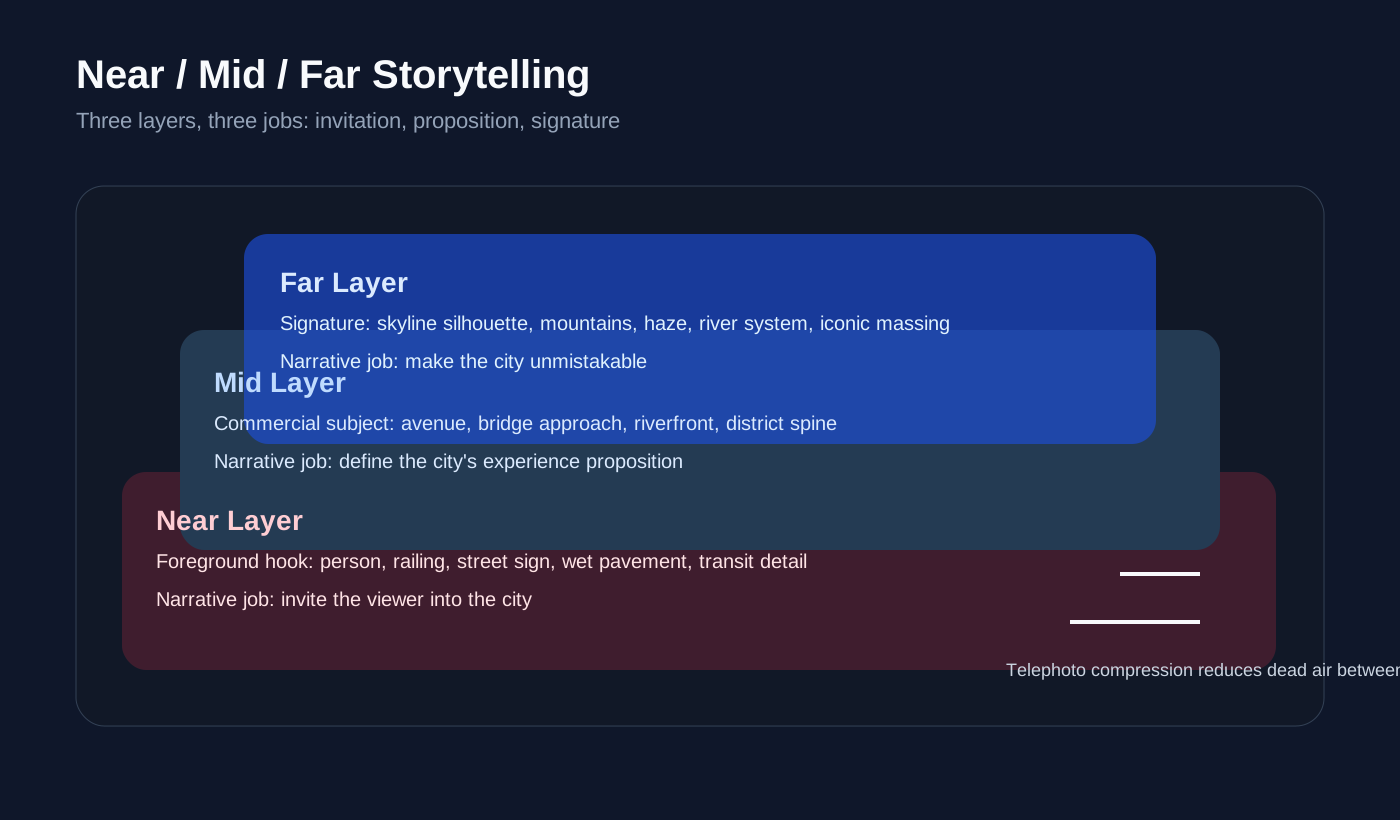
That is where the near / mid / far structure becomes useful.
Think of it as a three-layer narrative rather than a pure composition trick.
Near layer: the invitation
The foreground is where the poster earns attention.
This layer can hold motion, texture, or a human-scale hook: a passerby, a terrace edge, a railing, a food stall detail, a taxi roof, a cyclist, wet pavement, a street sign, a train window reflection. It gives the viewer a point of entry and prevents the city from feeling like a flat wallpaper print.
The near layer should not overpower the whole image. Its job is to pull the viewer into the scene and establish tactile credibility.
Mid layer: the commercial subject
The middle distance is usually where the poster’s main selling frame lives.
This is where you place the city’s most legible icon set: the avenue, river bend, observation deck, bridge approach, historic roofline, pedestrian corridor, or transportation spine that makes the place recognizable without becoming a tourist brochure collage.
If the foreground is the invitation, the mid layer is the proposition.
Far layer: the city’s signature
The background should not merely be “more skyline.” It should carry the city’s macro identity.
This is where atmosphere, elevation, silhouette, skyline density, mountain walls, river systems, haze, neon glow, winter light, or iconic tower geometry can establish the city’s last layer of recognition.
The far layer finishes the sentence the near and mid layers began.
When prompts are written this way, the poster gains internal logic:
- the foreground says “enter”
- the middle ground says “experience this”
- the background says “this could only be this city”
That is much stronger than simply listing attractions.
Good prompts translate city identity into visual behavior
The next mistake many creators make is treating city identity as a noun problem.
They think the prompt only needs the right landmark names.
But city identity usually behaves more like a system of visual pressures:
- pace
- density
- elevation
- temperature
- material
- light rhythm
- signage language
- traffic pattern
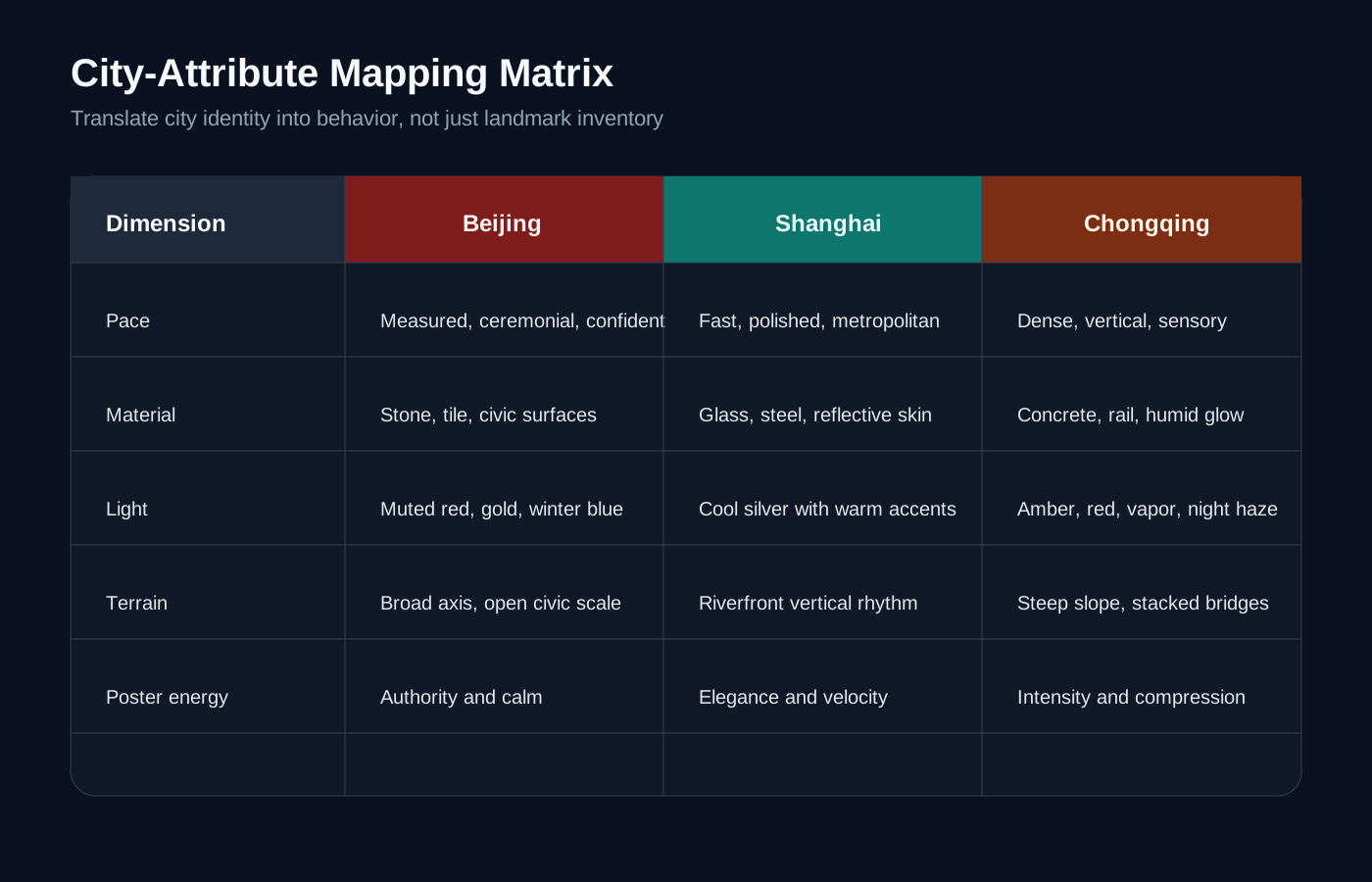
This is what I mean by city-attribute mapping.
Instead of asking only, “Which landmarks belong to this city?” ask, “What kind of spatial and emotional behavior defines this city when it becomes a poster?”
Here is a practical way to think about it.
Beijing
Beijing often benefits from prompts that balance monumentality with civic order.
Useful attributes include:
- broad axial space
- ceremonial scale
- historic rooflines against contemporary massing
- restrained but powerful red, gold, gray, and winter-blue palettes
- calm authority rather than hyperactive spectacle
Shanghai
Shanghai usually works best when the prompt emphasizes vertical elegance, finance-driven polish, and riverfront contrast.
Useful attributes include:
- glass towers and river edges
- Art Deco memory mixed with futuristic density
- reflective surfaces
- cool metallic tones with controlled warm highlights
- premium editorial energy rather than postcard nostalgia
Chongqing
Chongqing becomes weak when reduced to “cyberpunk night city.”
Its real strength often comes from slope, stacked infrastructure, humidity, river elevation, and transit woven through dense topography.
Useful attributes include:
- steep vertical layering
- bridges, stairways, rails, and cliffside massing
- warm vapor, dense night glow, and moody weather
- compressed hillside urbanism
- sensory intensity without losing geographic specificity
The broader lesson is simple: map the city into behavior, not just inventory.
Once you do that, the prompt becomes much better at producing images that feel locally grounded instead of globally generic.
The upside and downside of city-attribute mapping
Used well, attribute mapping is what stops the output from looking globally interchangeable.
Advantages
- it gives the image a city-specific emotional logic
- it reduces dependence on obvious landmark stacking
- it creates a more reusable prompt method across many cities
Potential drawbacks
- it can drift into stereotypes if the attributes are too broad
- it can become mood-heavy and under-specified if material cues are missing
- it can weaken recognizability if city behavior replaces all iconic anchors
The best prompts keep one foot in atmosphere and one foot in concrete urban evidence.
Typography should feel embedded, not overlaid
City tourism posters often fail at the final mile: the image looks good, but the words do not belong to the world.
This usually happens because the prompt treats typography as an afterthought.
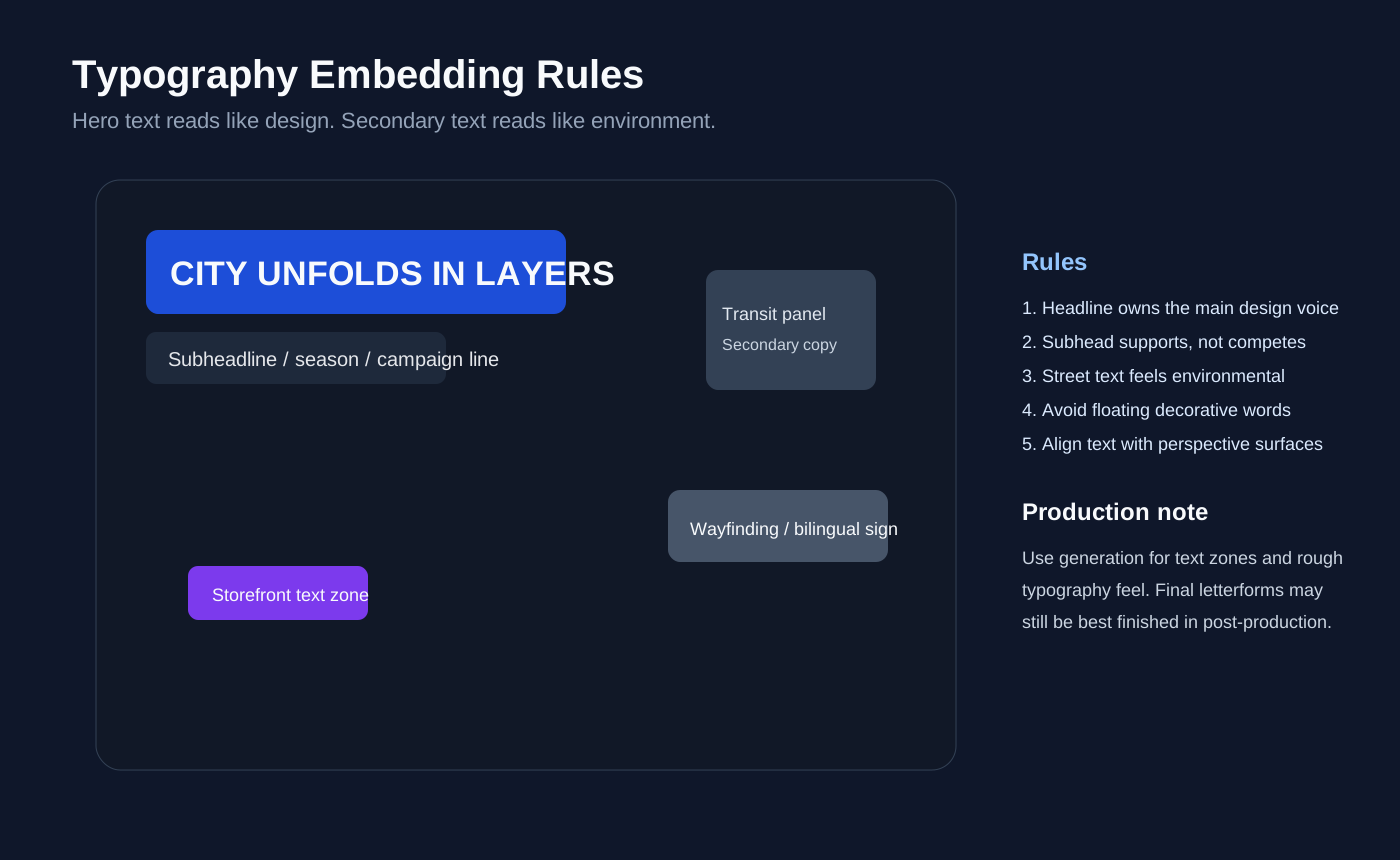
If you want the poster to feel more integrated, the text needs a role inside the image logic itself.
That means deciding early:
- what text is a designed headline
- what text is environmental signage
- what text is bilingual wayfinding
- what text belongs to ad boards, transit posters, storefronts, or lightboxes
The most useful rule is this:
hero text should read like design; secondary text should read like environment.
In practice, that means:
- the main campaign headline can be clean, intentional, and centrally art-directed
- subheads can sit on posters, billboards, guide panels, or brand blocks
- street-level Chinese or English text should feel diegetic, not randomly scattered
- signage should match the city’s tone instead of becoming decorative gibberish
When writing prompts, it helps to specify both placement and discipline:
- elegant embedded headline typography
- legible but restrained subheadline
- bilingual signage integrated into the scene
- ad-quality text placement
- no chaotic floating text
- typography aligned with architecture and perspective
For creator use, this is especially important because text inside generated images still breaks easily. Clear rules do not guarantee perfect lettering, but they dramatically improve whether the composition reserves believable spaces for words.
The strengths and risks of embedded text prompting
Advantages
- it makes the poster feel designed rather than merely illustrated
- it reserves real spatial zones for the headline and supporting copy
- it helps bilingual or environmental text feel part of the city scene
Potential drawbacks
- many image models still render letters inconsistently
- over-specifying text can damage composition if too many surfaces compete
- environmental signage can turn into decorative nonsense if placement rules are vague
In production, this is why many teams still use generated text as a composition rehearsal and finalize the exact typography in post.
A reusable playbook for city tourism poster prompts
Once the logic above is clear, the prompt can become much more modular.
Here is a reusable skeleton:
A premium city tourism campaign poster for [CITY], shot with a telephoto lens and compressed urban perspective, designed as a real commercial travel advertisement rather than a scenic collage.

Foreground: [human-scale hook, texture, motion, street-level object, or transport detail].
Midground: [primary city scene, landmark corridor, bridge, avenue, riverfront, district, or architectural centerpiece].
Background: [skyline silhouette, mountains, river system, haze, towers, layered elevation, or macro city signature].

Visual behavior: [city temperament translated into density, palette, pace, weather, material, and light rhythm].
Typography: [headline treatment], [subheadline treatment], [bilingual or environmental signage rule], naturally embedded into billboards, transit panels, storefronts, or architectural surfaces.

Style: polished campaign art direction, premium editorial realism, strong spatial layering, readable composition, high-end tourism branding, cinematic but believable atmosphere.
This structure is useful because it forces the prompt to answer the right questions in the right order:
- What kind of commercial image is this?
- How is space compressed?
- What does each depth layer do?
- How does this city behave visually?
- Where do the words belong?
That sequence is often more important than adding more adjectives.
A concrete iteration example
Below is a practical way to evolve the same idea instead of rewriting from scratch each time.
Version 1: scenic but weak
A beautiful tourism poster for Chongqing at night, neon lights, mountains, skyline, river, cinematic, high detail.What it gets right
- it gives the model a city, a time of day, and a mood
Why it usually fails
- no lens logic
- no foreground / middle / background jobs
- no typography rule
- no distinction between atmosphere and city-specific behavior
Version 2: richer but still unstable
A cinematic Chongqing tourism advertisement at night with Hongyadong, bridges, steep mountains, dense buildings, glowing lights, dramatic perspective, futuristic urban atmosphere, premium travel poster.What improves
- stronger icon set
- more explicit campaign intent
Why it still breaks
- it still encourages landmark stacking
- “dramatic perspective” often widens instead of compressing
- text still has no believable surface strategy
Version 3: art-directed and directable
A premium Chongqing tourism campaign poster, shot with a telephoto lens and compressed urban perspective, designed as a real commercial travel advertisement rather than a scenic collage. Foreground: wet street railing, a passing commuter silhouette, glowing taxi reflections. Midground: layered bridge approach, elevated rail line, illuminated cliffside buildings and a dense pedestrian corridor. Background: stacked mountain city skyline, humid river haze, warm vapor and compressed night density. Visual behavior: steep terrain, vertical infrastructure, tactile humidity, amber and deep red glow, intense but readable urban energy. Typography: elegant embedded headline, restrained subheadline on a transit billboard, bilingual wayfinding integrated into the architecture, no chaotic floating text.Why this version works better
- it gives the model an optical instruction
- it assigns each layer a different narrative role
- it maps Chongqing as behavior, not just as inventory
- it pre-allocates where the words belong
A quick mapping checklist before you write the final prompt
Before sending the prompt into an image model, it helps to sanity-check five things:
- Is the lens logic explicit enough to prevent a loose collage?
- Does each depth layer have a different storytelling job?
- Are the city cues based on behavior as well as landmarks?
- Does the typography have believable surfaces to live on?
- Would the image still feel like the same city if one landmark disappeared?
If the answer to the last question is no, the prompt is probably too dependent on icon stacking and not strong enough on city identity.
Demonstration boards for three cities
These local figures are schematic poster demos rather than final generated campaign renders. Their job is to show how the same prompt method shifts across different city identities.
Beijing demonstration
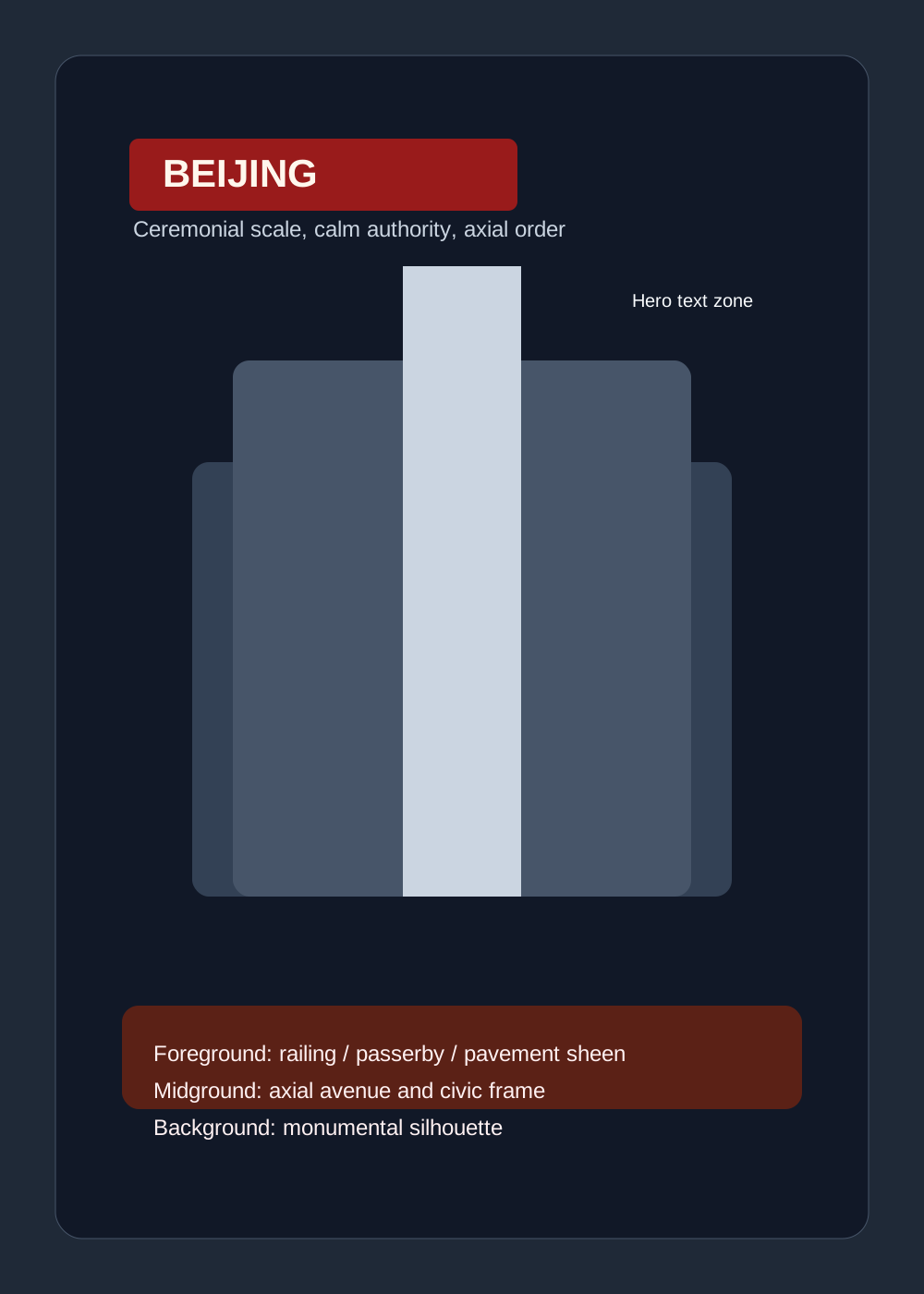
- Prompt focus: axial space, ceremonial scale, restrained red-gold-gray palette, calm authority
- What the demo illustrates: how Beijing benefits from order, monumentality, and controlled headline placement rather than excessive visual noise
- Upgrade path for a real generated version: replace the schematic frame with a locally generated poster asset at
./imgs/beijing-poster-case.webp
Shanghai demonstration
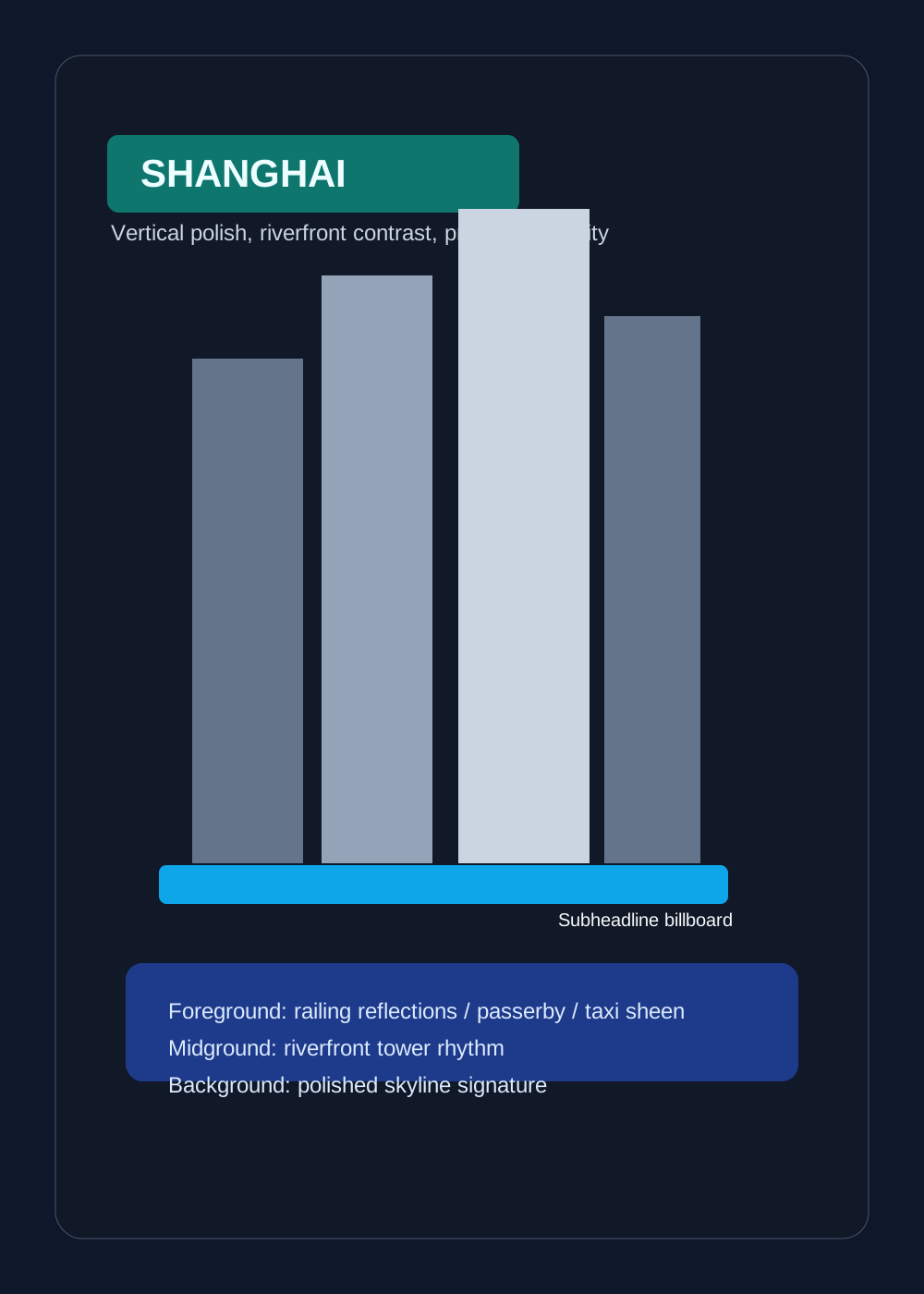
- Prompt focus: riverfront contrast, vertical polish, reflective surfaces, premium editorial energy
- What the demo illustrates: how Shanghai reads best when elegance and velocity work together
- Upgrade path for a real generated version: replace the schematic frame with a locally generated poster asset at
./imgs/shanghai-poster-case.webp
Chongqing demonstration
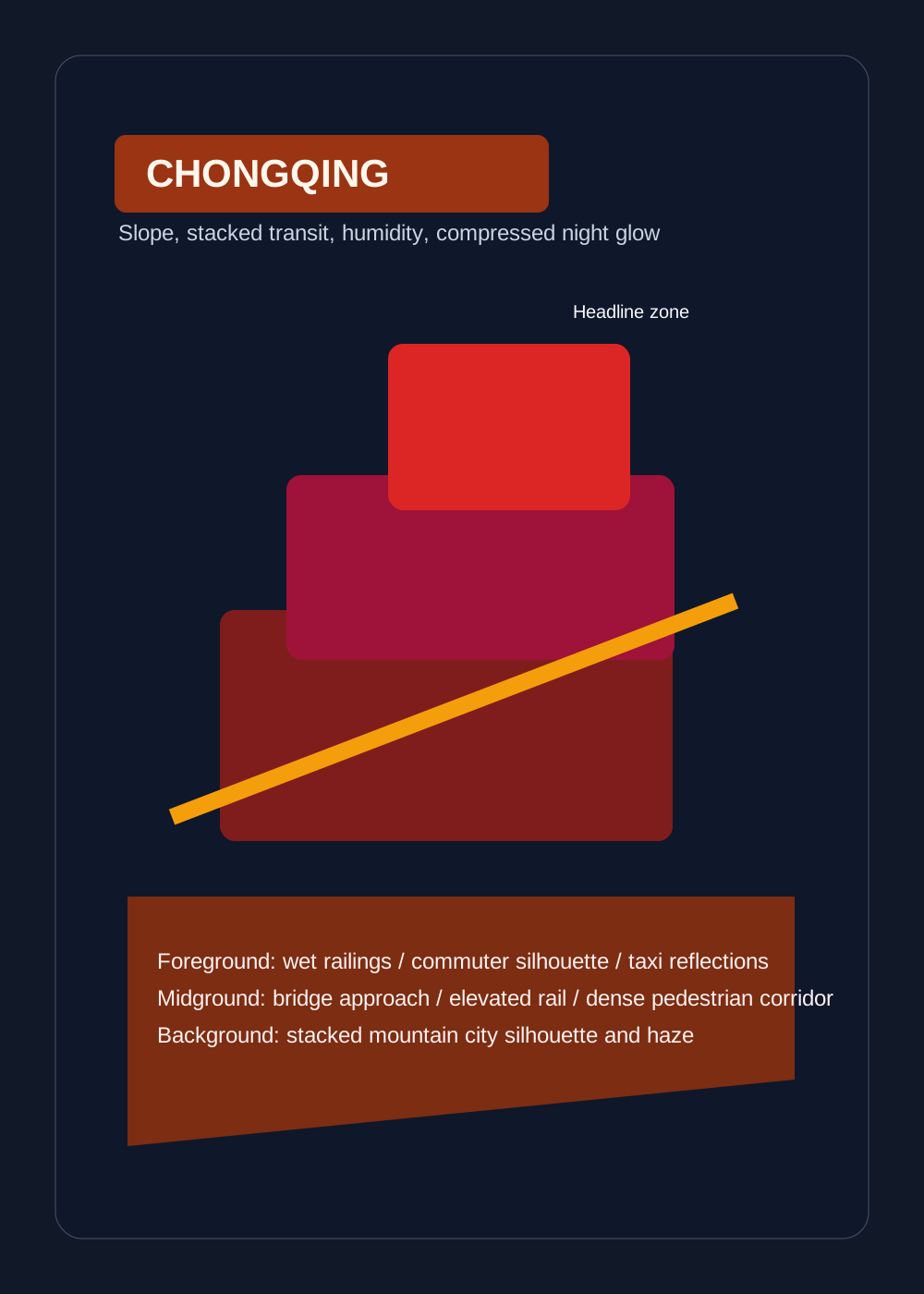
- Prompt focus: steep topography, stacked infrastructure, humidity, amber-red night glow
- What the demo illustrates: how Chongqing becomes legible when terrain and transit are treated as one system
- Upgrade path for a real generated version: replace the schematic frame with a locally generated poster asset at
./imgs/chongqing-poster-case.webp
Reserved local image slots for final campaign renders
To keep this post production-friendly before final assets are exported, the case-study image paths are reserved here as local references rather than active Markdown image embeds.
Cover concept
- Path:
./imgs/cover-concept.webp - Intended use: a composite editorial hero image that communicates telephoto compression, layered narrative, and integrated typography in one frame
- Suggested caption:
A city tourism poster only starts working when the image reads like campaign art direction, not a landmark inventory.
Beijing case
- Path:
./imgs/beijing-poster-case.webp - Intended use: Beijing example focused on axial order, monumental calm, and restrained cultural authority
- Suggested caption:
Beijing works best when the poster balances ceremonial scale with everyday urban entry points.
Shanghai case
- Path:
./imgs/shanghai-poster-case.webp - Intended use: Shanghai example focused on riverfront polish, vertical rhythm, and premium metropolitan sheen
- Suggested caption:
Shanghai needs elegance, velocity, and surface control more than generic futurism.
Chongqing case
- Path:
./imgs/chongqing-poster-case.webp - Intended use: Chongqing example focused on slope, stacked transit, humid atmosphere, and compressed night density
- Suggested caption:
Chongqing becomes memorable when the poster captures topography and infrastructure as one visual system.
Final takeaway
The easiest way to write a weak city tourism poster prompt is to ask the model for a beautiful city image and hope the poster logic appears on its own.
It usually will not.
The stronger approach is to treat the prompt like a piece of art direction:
- compress the city spatially
- assign each distance layer a storytelling role
- translate city identity into visual behavior
- make typography part of the world, not a sticker on top
That is when a city poster stops looking like generated scenery and starts feeling like something a creative director might actually approve.